Distress Lines:
If you are experiencing an emergency, please call 9-8-8, 2-1-1, 9-1-1, go to your nearest emergency department, or contact a support line, such as:
Black Youth Helpline: 1-833-294-8650
Distress Centre of Toronto: 416-408-4357 also see Distress and Crisis Ontario
Gerstein Centre Crisis Line (24 hr): 416-929-5200
Suicide and Crisis Hotline (24 hr): 1-800-448-3000
Assaulted Women’s Help Line (24 hr): 1-866-863-0511
Toronto Rape Crisis Centre/Multicultural Women Against Rape
(24 hr): 416-597-8808
Kids Help Phone Phone (20 and under): 1-800-668-6868
Seniors Safety Line (24 hr): 1-866-299-1011
Lesbian Gay Bi Trans Youth Line (26 and under): 416-962-9688
Trans LifeLine: 1-877-330-6366
Hope for Wellness (all Indigenous peoples, 24 hr): 1-855-242-3310
National Indian Residential School Crisis Line (24 hr): 1-800-721-0066
Affordable and Low Cost Therapy:
Affordable Counselling in Toronto
Centre for Training in Psychotherapy
The Support Network for Indigenous Women and Women of Colour
Toronto Institute for Relational Psychotherapy
Open Path Psychotherapy Collective
The Medical Clinic for Person-Centred Psychotherapy (OHIP covered)
Medical Psychotherapy Association Canada (OHIP covered)
Toronto Psychoanalytic Society & Institute (MDs are OHIP covered)
Non-Insured Health Benefits Program (First Nations & Inuit)
Understanding Your Window of Tolerance: Building Emotional Resilience:
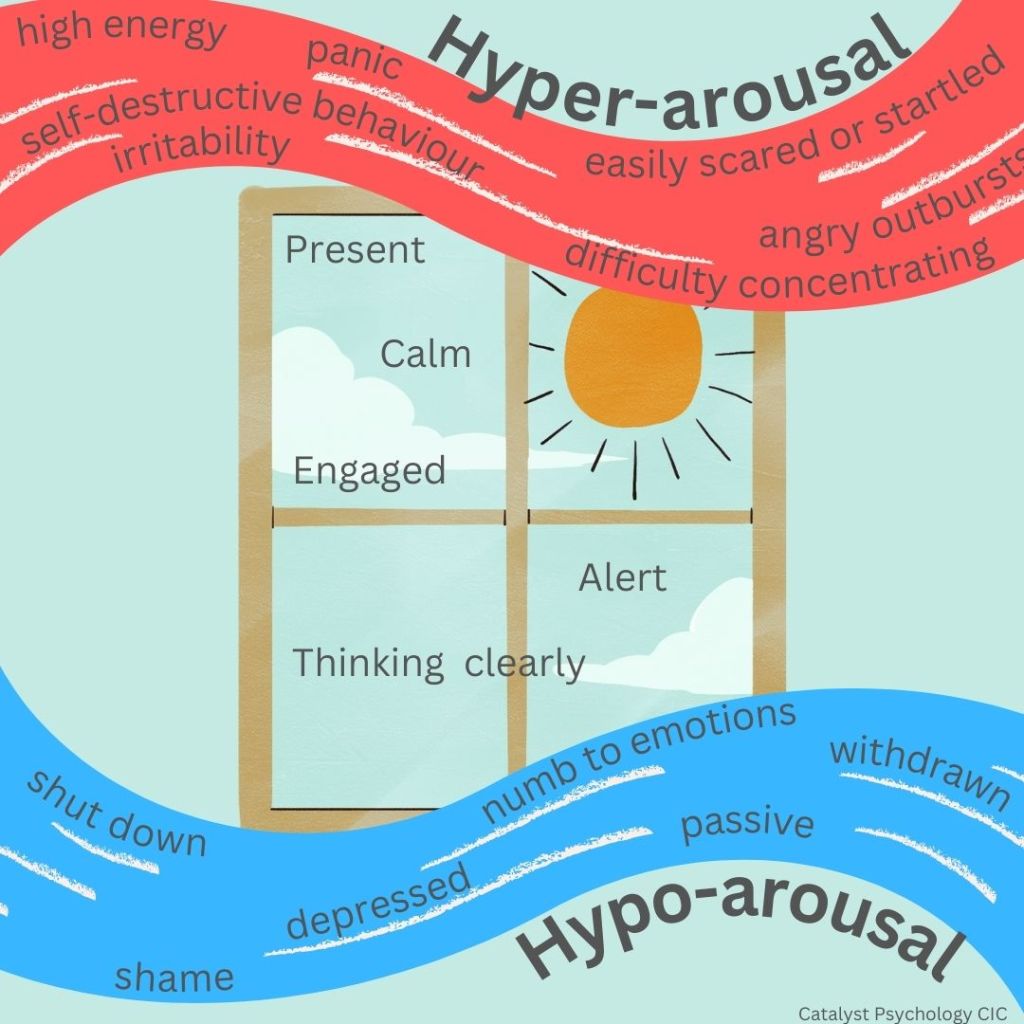
Understanding the Window of Tolerance
Your “Window of Tolerance” is the zone where you feel balanced, calm, and able to handle everyday stress. It’s where you can think clearly, manage your emotions, and react in a healthy way to life’s challenges.
When stress, trauma, or overwhelming feelings push you out of this window, you can either feel overwhelmed and anxious (Hyperarousal) or shut down and numb (Hypoarousal). Both of these reactions make it harder to cope with day-to-day life.
Why It’s Important
Staying within your window of tolerance helps you feel more in control of your emotions and decisions. When you’re in this zone, you can manage stress, be present in relationships, and respond to challenges in a healthy way. The larger your window, the more you can handle without feeling overwhelmed.
How Therapy Helps
In therapy, we focus on helping you stay within or return to your window of tolerance. By learning coping skills, practicing mindfulness, and processing past trauma (like with EMDR), you can expand your window. This means you’ll have more space to manage life’s stressors, feel more grounded, and respond in a balanced way.
With practice, therapy helps you grow your window of tolerance so you can face challenges with more ease and confidence. For more information please see the following PDF and image: Window of Tolerance Information [PDF]
Coping Skills:
This PDF helps you identify and explore your emotions and unmet needs: Feelings and Needs List [PDF]
This PDF walks you through various methods of stimulating the nervous system to come out of fight, flight, or freeze: Nervous System Regulating Activities: Supporting Awareness, Embodiment and Resilience [PDF]
This PDF guide offers practical grounding techniques you can use anytime you need to feel more centered and calm: Soothing and Grounding Techniques [PDF]
This PDF offers a mindfulness exercise to help you explore self-compassion: Radical Acceptance and Self-Compassion [PDF]
This PDF provides a simple deep breathing exercise to help you calm your mind and body: Deep Breathing Exercise [PDF]
 True Self Healing